
When a Period Hormonal Imbalance May Be Changing Your Cycle

Reviewed by Dr. Peter Wannigman, ND, Licensed Naturopathic Doctor and former pharmacist, one of California's inaugural licensed NDs (2004). Reviewed September 2026.
When a Period Hormonal Imbalance May Be Changing Your Cycle
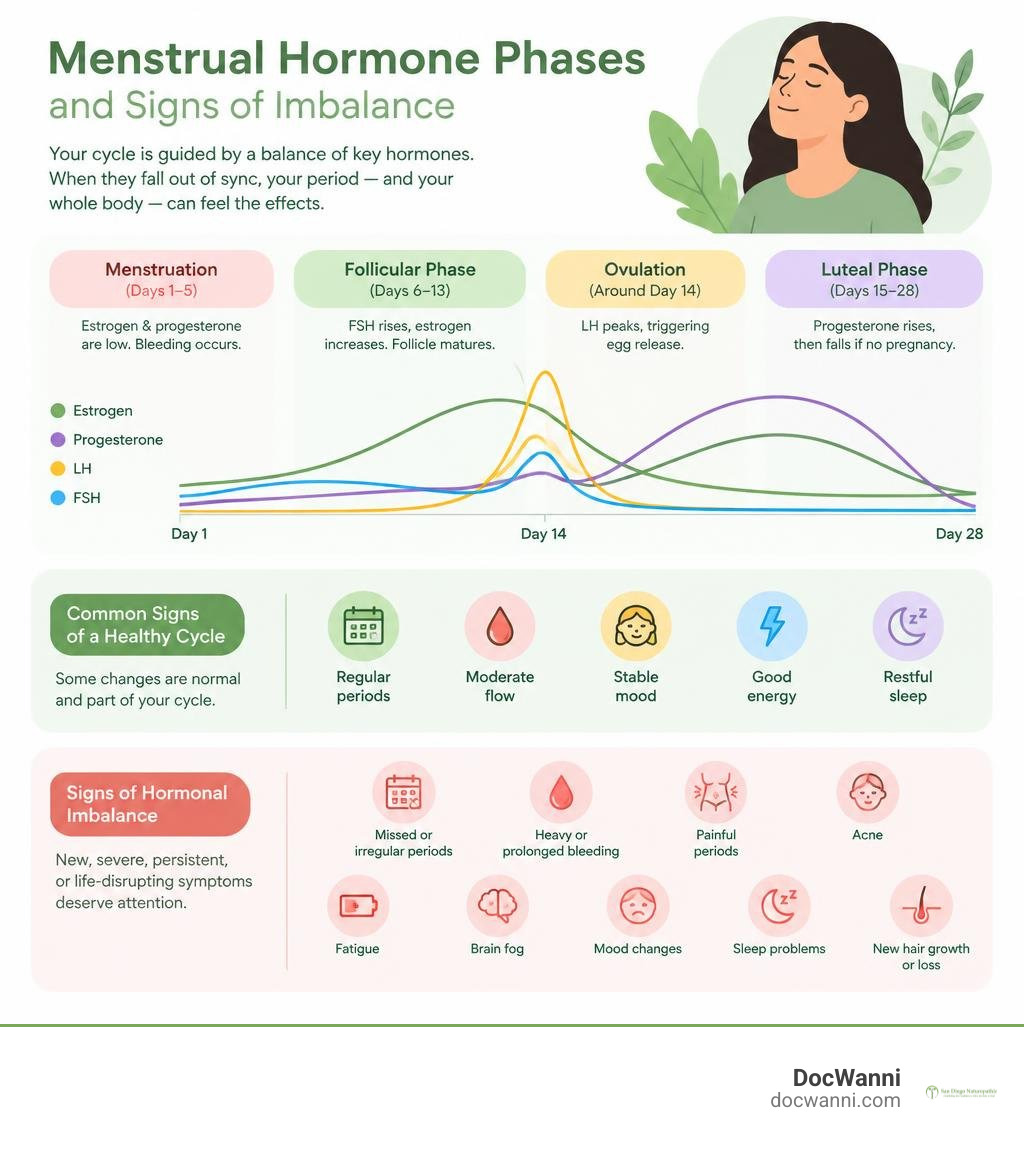
A period hormonal imbalance happens when the hormones that guide ovulation and bleeding — especially estrogen, progesterone, FSH, and LH — do not follow their usual pattern. It can lead to missed, unusually heavy, painful, or unpredictable periods, along with symptoms such as acne, fatigue, brain fog, mood changes, sleep problems, or new hair growth or loss.
A few days of mild bloating, cramps, or irritability before a period can be normal PMS. But symptoms that are new, severe, persistent, or disrupting work and daily life deserve attention. Track your cycle, bleeding, pain, energy, mood, sleep, and gut symptoms for a few months, then share that record with a qualified clinician.
Your menstrual cycle is not separate from the rest of your health. Hormones also affect metabolism, digestion, skin, mood, and fertility. Changes may be linked to stress, major weight or exercise changes, pregnancy or perimenopause, medications, or conditions such as PCOS and thyroid disease.
Decoding Period Hormonal Imbalance: Why Your Menstrual Cycle Changes
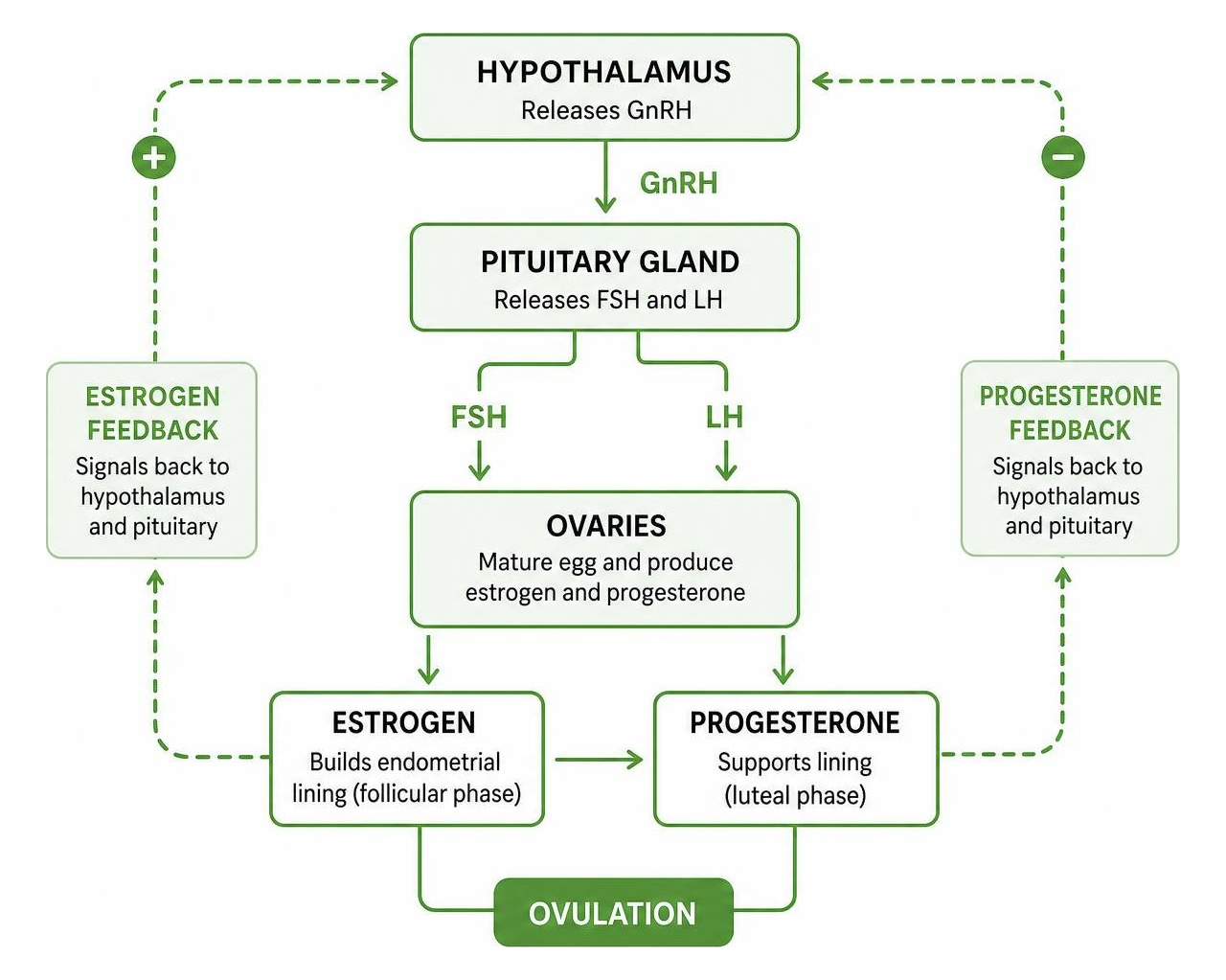
The menstrual cycle is orchestrated by a complex feedback loop known as the hypothalamic-pituitary-ovarian (HPO) axis. Think of your brain and ovaries as musicians in a chamber orchestra: your hypothalamus releases gonadotropin-releasing hormone (GnRH), prompting the pituitary gland to release follicle-stimulating hormone (FSH) and luteinizing hormone (LH). These signals tell your ovaries precisely when to mature an egg and produce sex steroid hormones.
When everything is in sync, a healthy cycle typically lasts between 24 and 38 days, with menstrual bleeding spanning 3 to 7 days. However, global health data indicates that menstrual cycle irregularities affect anywhere from 5% to 35.6% of women, depending on age, lifestyle, and underlying health factors. When the communication lines within the HPO axis encounter interference, the delicate state of hormone balance falters, altering cycle frequency, flow volume, and physical well-being.
How Estrogen and Progesterone Dictate Your Cycle
Your cycle is split into two primary phases separated by ovulation:
- The Follicular Phase: Estrogen rises as ovarian follicles develop, thickening the endometrial lining in preparation for a potential pregnancy.
- Ovulation: A surge in LH triggers the release of a mature egg.
- The Luteal Phase: The ruptured follicle transforms into the corpus luteum, which secretes progesterone. Progesterone stabilizes the uterine lining and acts as a natural calmative agent for the nervous system.
If fertilization does not occur, the corpus luteum breaks down, estrogen and progesterone levels drop, and the uterine lining sheds as your menstrual period. A disruption in this delicate dance — such as anovulatory cycles where progesterone is never produced — can lead to heavy, irregular bleeding and pronounced cycle distress.
Normal PMS Symptoms vs. a True Period Hormonal Imbalance
It is common to feel a mild dip in energy or slight breast tenderness a couple of days before your period starts. However, many women are told that severe monthly suffering is simply "part of being a woman." This is a misconception. There is a distinct line between physiological premenstrual symptoms and a clinical imbalance.
| Feature | Normal Premenstrual Syndrome (PMS) | Clinical Period Hormonal Imbalance |
|---|---|---|
| Timing | 2 to 5 days before menses; resolves rapidly once bleeding starts | Chronic throughout the luteal phase or lingering across the entire cycle |
| Pain Level | Mild, manageable cramping easily alleviated by warmth or mild analgesics | Debilitating dysmenorrhea, heavy pelvic pain, or pain radiating to back/legs |
| Cycle Regularity | Predictable intervals (24–38 days) | Cycles under 24 days, over 38 days, unpredictable spotting, or skipped months |
| Mood & Mental State | Mild, temporary irritability or transient emotional sensitivity | Severe mood shifts, panic attacks, depression, or profound brain fog |
| Flow Volume | Modest blood loss (25–45 mL) lasting 3–7 days | Flooding (soaking a pad/tampon every 1–2 hours), large clots, or faint spotting |
| Daily Function | Daily routines, work, and social life remain fully intact | Missed workdays, bed rest required, or severe disruption to daily activities |
Common Signs and Systemic Symptoms of Menstrual Dysregulation
Because hormone receptors exist in almost every tissue of the female body, an endocrine shift rarely stays confined to your reproductive organs. When the balance shifts, multiple body systems feel the impact.

Physical and Metabolic Manifestations
When reproductive and metabolic signals fall out of alignment, a variety of hormone imbalances can manifest across everyday physical markers:
- Irregular Bleeding Patterns: Skipping cycles (oligomenorrhea), complete absence of periods (amenorrhea), or unusually heavy bleeding (menorrhagia).
- Skin and Hair Changes: Persistent jawline or cystic adult acne caused by relative androgen dominance, as well as diffuse hair thinning or excess facial hair (hirsutism).
- Unexplained Weight Fluctuations: Sudden fluid retention, stubborn central adiposity, or unexplained weight shifts despite consistent dietary habits.
- Gastrointestinal Distress: Cyclical bloating, constipation, or loose stools, driven by estrogen and progesterone receptors located throughout the digestive tract.
- Severe Fatigue and Headaches: Crashing afternoon energy levels, estrogen-withdrawal migraines, or waking up unrefreshed despite getting enough sleep.
Emotional Well-Being, Sleep, and Mental Health
Hormones directly regulate central nervous system neurotransmitters. Estrogen enhances dopamine and serotonin synthesis and receptor sensitivity, while progesterone metabolizes into allopregnanolone, a neurosteroid that interacts with calming GABA receptors.
When estrogen fluctuates erratically or drops too sharply, women frequently experience profound mood swings. Furthermore, research confirms that women suffer from mood and anxiety disorders up to two times more than men, showing a doubled risk for developing anxiety and depression due to neuroendocrine vulnerabilities. An imbalance often presents as sleep fragmentation, nighttime waking with hot flashes or night sweats, and persistent morning brain fog.
Clinical Causes and Conditions Linked to Cycle Disruptions
A disruption in cycle regularity is rarely a standalone event; it is usually a sign of an underlying endocrine or metabolic issue. Chronic stress activates the hypothalamic-pituitary-adrenal (HPA) axis, elevating cortisol and downregulating reproductive signals in favor of basic survival mechanisms. Similarly, the perimenopausal transition brings physiological shifts that warrant proactive management; reviewing practical guides on how to talk to your doctor about perimenopause can help you prepare for these appointments.
Endocrine Disorders and Clinical Causes of Period Hormonal Imbalance
Several distinct medical conditions are primary drivers of period disruption:
- Polycystic Ovary Syndrome (PCOS): Characterized by ovulatory dysfunction, polycystic ovarian morphology, and elevated circulating androgens. PCOS requires comprehensive androgen support alongside metabolic interventions to resolve insulin resistance and restore regular cycles.
- Thyroid Dysfunction: The thyroid gland sets the metabolic pace for every cell in your body, including your ovaries. Both underactive (hypothyroidism) and overactive (hyperthyroidism) states lead to cycle abnormalities, anovulation, and fertility challenges. Addressing underlying thyroid issues is essential for restoring cycle balance. Notably, up to 50% of patients receiving head and neck radiation develop hypothyroidism, highlighting how vulnerable this gland is to medical interventions.
- Hypoparathyroidism: Accidental surgical damage accounts for approximately 75% of hypoparathyroidism cases, which disrupts calcium metabolism and indirectly affects neuromuscular and endocrine balance.
- Endocrine Pathology and Chronic Inflammation: Comprehensive research on endocrine risks and cycle irregularities emphasizes how chronic systemic inflammation, hypothalamic suppression, and metabolic imbalances can disrupt menstrual regularity.
Long-Term Impacts on Fertility and Health
Ignoring persistent menstrual irregularities can lead to health consequences far beyond cycle unpredictability. Hormonal imbalances represent the leading cause of female infertility, largely through chronic anovulation or luteal phase defects.
Over time, long-term estrogen deficiencies impair bone mineral density, increasing the risk for osteopenia and osteoporosis. Conversely, unopposed estrogen (high estrogen without adequate progesterone) increases the risk of endometrial hyperplasia. Chronic hormonal imbalances are also linked to cardiovascular risk, dyslipidemia, and metabolic syndrome, making early evaluation vital for long-term health.
Diagnostic Testing and Functional Lab Assessments
A comprehensive evaluation requires more than a quick pelvic exam. Because hormone levels naturally fluctuate across the cycle, standard single-draw blood tests can sometimes miss subtle patterns if they are not timed correctly.
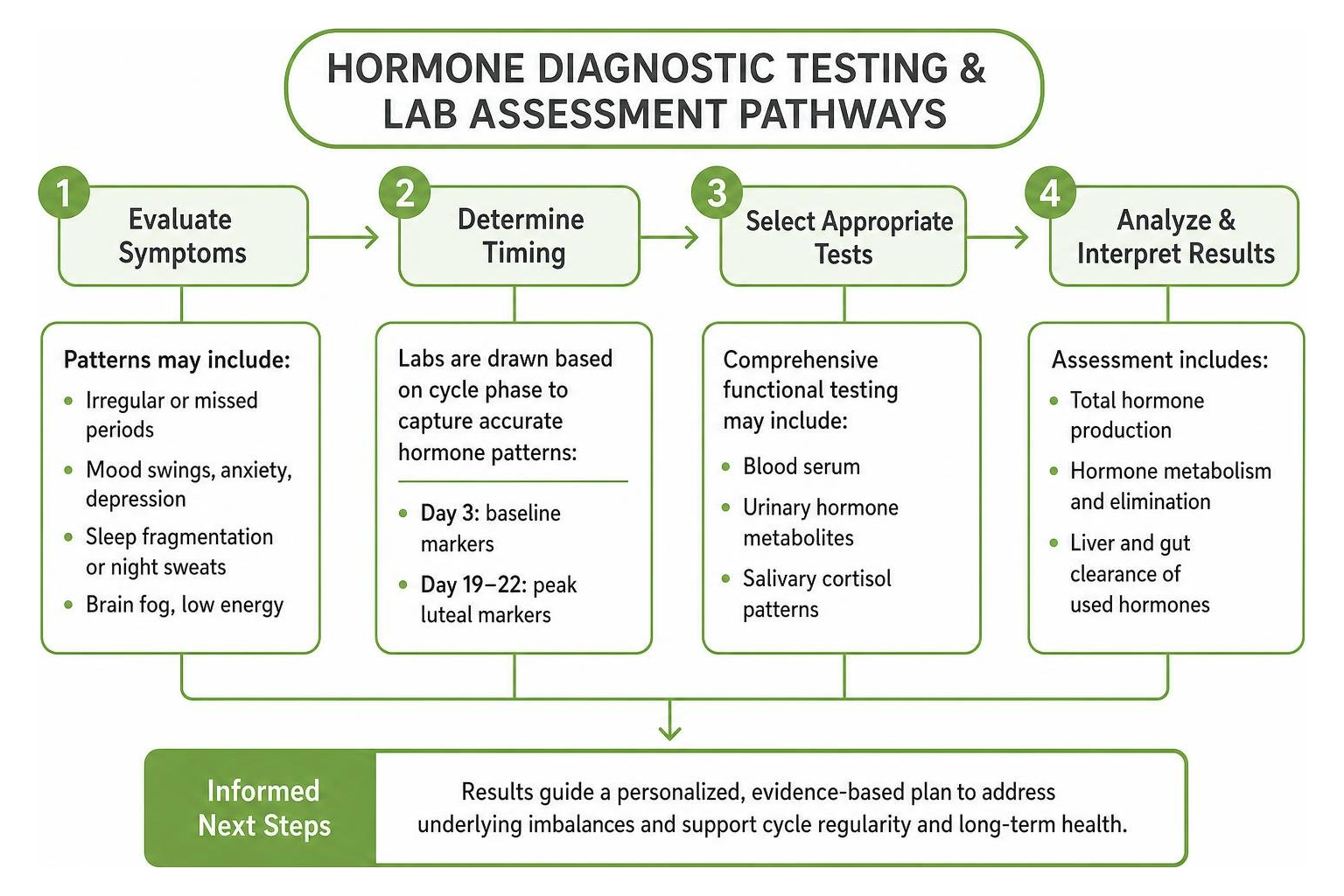
At DocWanni, our virtual, evidence-based approach uses comprehensive functional medicine lab testing to evaluate blood serum, urinary hormone metabolites, and salivary cortisol patterns. This allows us to assess both total hormone production and how effectively your liver and gut eliminate used hormones.
Key Lab Markers to Evaluate
A thorough laboratory workup should be tailored to your specific cycle phase (typically drawn on Day 3 for baseline markers, and Day 19–22 for peak luteal markers):
- Estradiol (E2) and Progesterone: Assessed during the mid-luteal phase to verify whether ovulation occurred and check the balance between these two key hormones.
- FSH and LH: Evaluated on Day 3 to assess ovarian reserve and screen for elevated LH-to-FSH ratios commonly seen in PCOS.
- Complete Androgen Panel: Total and free testosterone, DHEA-S, and androstenedione to assess adrenal and ovarian androgen production.
- Fasting Insulin and Glucose: Essential for uncovering early insulin resistance that may be driving ovarian dysfunction before HbA1c shifts.
- Comprehensive Thyroid Panel: TSH, Free T3, Free T4, and thyroid antibodies (TPO and TG) to catch subclinical autoimmune thyroiditis.
- Adrenal Profile: Four-point salivary or urinary cortisol and cortisone to map diurnal stress patterns.
When to Seek Professional Guidance
You should consult a qualified clinician if you experience:
- Periods consistently arriving less than 24 days or more than 38 days apart.
- A sudden cessation of your period for three consecutive months (without pregnancy).
- Bleeding that lasts longer than 7 days, or requires changing menstrual products every 1 to 2 hours.
- Severe pelvic pain that interferes with work, school, or daily life.
- Unexplained weight changes, sudden hair loss, or severe mood disruptions.
Restorative Treatments and Lifestyle Strategies
Restoring hormonal balance requires a comprehensive approach that combines targeted clinical treatments with daily lifestyle foundations.

Medical and Integrative Therapies
Depending on the underlying cause identified during testing, integrative and medical treatments can help reset your cycle:
- Bioidentical Hormone Therapy: When ovarian output declines significantly during perimenopause or severe luteal insufficiency, bioidentical hormone replenishment offers molecularly identical hormone options to help stabilize levels. For those seeking localized, specialized care, exploring bioidentical hormone replacement therapy in San Diego provides tailored clinical pathways.
- Functional and Naturopathic Medicine: Our practice uses evidence-based naturopathic medicine to identify root causes. This personalized, three-step mentorship program is led by Dr. Peter Wannigman, a former pharmacist and pioneering California ND, delivering measurable health improvements via telehealth.
- Targeted Nutraceuticals: Evidence-supported botanicals and nutrients — such as myo-inositol for insulin sensitivity, Vitex (chasteberry) for luteal support, and magnesium glycinate with active B-vitamins for HPA-axis regulation — can be prescribed based on your individual lab results.
Evidence-Based Daily Habits for Hormonal Harmony
Daily habits create the biochemical foundation for your endocrine system:
- Low-Glycemic, Protein-Rich Nutrition: Stabilize your blood sugar by pairing high-quality proteins, healthy fats, and fiber at every meal. Avoiding glucose spikes prevents reactive insulin surges that can trigger excess androgen production in the ovaries.
- Strategic Strength and Aerobic Training: Prioritize resistance training and moderate cardiovascular exercise. Avoid chronic, exhaustive endurance workouts without adequate recovery, as this can elevate cortisol and disrupt ovulatory function.
- Circadian Rhythm and Sleep Optimization: Aim for 7 to 9 hours of uninterrupted sleep in a dark, cool room. Morning sunlight exposure helps reset your central circadian clock and supports evening melatonin production.
- Active Nervous System Regulation: Incorporate daily parasympathetic activities like deep diaphragmatic breathing, yoga, or mindfulness meditation to lower baseline cortisol and protect your HPO axis.
- Minimizing Endocrine Disruptors: Reduce your exposure to environmental xenoestrogens by choosing glass over soft plastics, filtering your drinking water, and opting for clean, fragrance-free personal care products.
Frequently Asked Questions About Menstrual Health
How do I know if my irregular cycle is caused by hormones?
Your menstrual cycle is governed entirely by hormonal signals. If your cycles are consistently irregular, unusually light, heavy, or missed entirely (and pregnancy is ruled out), a hormonal imbalance is almost always involved. Tracking your symptoms alongside targeted lab tests helps pinpoint the exact endocrine mechanism at play.
Can stress alone cause missed or irregular periods?
Yes. Severe physical or emotional stress activates the adrenal glands to release high levels of cortisol and corticotropin-releasing hormone (CRH). This can suppress the hypothalamus from pulsing GnRH, leading to delayed ovulation, anovulatory cycles, or hypothalamic amenorrhea.
How long does it take to balance menstrual hormones?
An ovarian follicle takes approximately 90 to 100 days (roughly three full menstrual cycles) to develop from its resting state to ovulation. Because of this biological timeline, functional and lifestyle interventions generally take about 3 to 6 months of consistent care to produce measurable, lasting improvements in cycle regularity and symptom relief.
Conclusion
A disrupted menstrual cycle is not something you simply have to live with — it is your body's way of communicating an underlying imbalance. Whether your symptoms stem from chronic stress, thyroid dysfunction, PCOS, or nutrient deficiencies, identifying the root cause is the first step toward lasting relief.
By tracking your symptoms, using targeted functional testing, and making steady, evidence-based lifestyle changes, you can restore natural cycle harmony. If you are ready for comprehensive, virtual care to help you regain your energy and balance your hormones, connect with us at DocWanni to begin your path to long-term wellness.
Information on this website is for educational purposes only and is not a substitute for medical advice, diagnosis, or treatment. A practitioner-patient relationship is not established until formally accepted by the practice.